

Business Operation · 2025
In this section22 topics
- Corporate Information4 items
- Dividend Policy2 items
- Major Shareholders1 item
- Business Strategies Overview6 items
- Material Changes & Developments2 items
- Use of Proceeds from Securities Offerings1 item
- Commitments Made in the Registration Statement1 item
- Group Operating-Structure Policy1 item
- Companies Where the Company Holds ≥10%1 item
- Shareholders with Potential Conflict of Interest1 item
- Relationships Among Major Shareholders2 items
- Shareholders' Agreement1 item
- Shareholding Diagram (Group Structure)3 items
- Income Structure4 items
- Product / Service Characteristics2 items
- Research & Development6 items
- Assets Used in the Business4 items
- Marketing Policy & Competition3 items
- Procurement of Products & Services8 items
- Projects Under Construction7 items
- Debentures & Bills of Exchange1 item
- Convertible Securities1 item
Corporate Information
Company Name
AMATA VN PUBLIC COMPANY LIMITED
Telephone
0-2792-0000
Website
http://www.amatavn.com
cs@amata.com
Dividend Policy
Dividend Policy
Dividend policy of Amata VN PCL
The Company intends to pay dividend not less than 40% of net profits after tax and legal reserves of unconsolidated financial statements. However, the Board of Directors will make decisions regarding dividend payment for the greatest benefits to shareholders. To illustrate, retaining profits for future capital expansion, debt repayment or working capital may be preferable to dividend payment in some cases.
Historical Dividend Payments
| This Year | Last Year | 2 Years Ago | 3 Years Ago | Metric | Description | Remark |
|---|---|---|---|---|---|---|
| 0.43 | 0.7 | 0.43 | 0.13 | Net profit per share (Baht : Share) | Net profit per share (baht : share) | Earning per share of 2024 changed from 0.09 to 0.07 due to the correction of
errors. |
| 0 | 0.05 | 0.08 | 0.07 | Dividend per share (Baht : Share) | Dividend per share (baht : share) | 2024 Dividend per share is pending for approval consideration of the 2025 Annual General Meeting of Shareholders. |
| 0 | 0 | 1 | Dividend stock ratio (Number of original shares: dividend shares) | Ratio of stock dividend payment (existing share : stock dividend) | ||
| 0 | 0 | 0.07 | 0 | Dividend share value per share (Baht : Share) | Value of stock dividend per share (baht : share) | |
| 0 | 0.5 | 0.08 | 0.07 | Total dividend payment value (Baht : Share) | Total dividend payment (baht : share) | |
| 0 | 26 | 16 | 64 | Dividend payout ratio to net profit (%) | Dividend payout ratio compared to net profit (%) |
Business Strategies Overview
Chairman's Message
Dear Shareholders,
In the year 2025, the global economy continued to face uncertainties stemming from multiple factors, including geopolitical tensions, volatility in global trade, as well as the direction of interest rates and inflation in many countries. Although the global economy showed signs of gradual recovery compared with the previous period, overall growth remained relatively constrained due to persistent tight global financial conditions, together with risks arising from shifts in global supply chains and international trade policies. Nevertheless, several countries in Southeast Asia continued to serve as key drivers of the global economy, supported by the recovery of trade and investment, as well as the transition of industrial sectors toward digital economies and advanced technologies.
Vietnam’s economy continued to demonstrate resilience and strong growth potential. In 2025, Vietnam recorded economic growth of 8.02 percent, representing a significant increase compared with 7.09 percent in 2024 and 5.05 percent in 2023. This achievement was driven primarily by the strong rebound of the export sector, which expanded by 18.2 percent year-on-year. Meanwhile, the Foreign Direct Investment (FDI) remained steadfast at 38.4 billion USD, reflecting a 0.5 percent increase from 2024 and continued investor confidence despite ongoing global economic uncertainties. The investment stays concentrated in the manufacturing and processing industries, followed by the real estate sector.
In addition, during 2025 Vietnam undertook significant adjustments through structural reforms and improvements to key legislation in several areas. These efforts aimed to enhance the efficiency of public administration, streamline regulatory procedures, and further strengthen the investment environment. The key measures included the restructuring of government agencies, revisions to laws related to investment, land use, and real estate development, as well as improvements to the tax system and business regulations in order to enhance the country’s overall competitiveness.
Under such circumstances, the Company continues to focus on expanding business and advancing projects development. These include investments in Amata City Bien Hoa, Amata City Long Thanh, and Amata Township Long Thanh projects in the South, as well as Amata City Ha Long and the new project, Amata City Phu Tho in the North. The Company remains fully committed to generating positive returns while creating value and sustainability for all stakeholders in an equitable and inclusive manner.
These remarkable and noteworthy growth of Vietnam’s economy reflects the country’s strong fundamentals and continued expansion potential. Amata VN Group is increasingly confident in the growth opportunities of Vietnam and believes that expanding the Company’s projects and business in Vietnam will form a solid foundation for sustainable revenue return for the Company, as well as create long-term economic values for Vietnam and all investors.
In 2025, the Company marked some key milestones as follows:
Amata VN acquired newly issued shares from the capital increase of Amata B.Grimm Power Vietnam Company Limited (“ABPVN”), a solar rooftop business in Vietnam, wholly owned by Amata B.Grimm Power Limited (“ABP”); a associated company of Amata Corp and B.Grimm Power Public Company Limited (“BGRIMM”). This subscription amounting to VND 25,622 million resulted in Amata VN holding 25% of ABPVN’s registered capital.
The company has adjusted the Investment Registration Certificate of ACHL from 714 hectares to 687 hectares to achieve its operational efficiency.
The company was granted an Investment Registration Certificate (IRC) for Amata City Phu Tho Joint Stock Company (“ACPT”) with total area of 476 hectares on 23 December 2025. The Enterprise Registration Certificate (ERC) was received on 25 December 2025, and the Company is currently in process of completing the relevant procedures for the establishment.
Amata City Long Thanh (“ACLT”) recorded land sales 17.9 hectares of land or 111.9 rai.
Amata City Ha Long (“ACHL”) recognized revenue from land sales 6.4 hectares or 40.0 rai.
The Company’s Board of Directors attaches high priority to ESG and stresses that all operations of the Company and its subsidiaries must strictly comply with the Company’s policy and guidelines on governance, social and environmental responsibility. The Company continues to maintain the balance between industry and local community to ensure high quality co-existence by embracing sustainable development concept in our business development plan in keeping with the “ALL WIN” philosophy. The Company has strong commitment to good corporate governance, accountability, transparency, and strict compliance to laws and ethical standard in all business conduct and operations.
The Company has consistently adhered to good corporate governance practices, as evidenced by recent achievements. In 2025, the Company maintained its position as a listed company with excellent corporate governance, holding a 5 stars rating (Excellent) of Corporate Governance Scoring of the Corporate Governance Report (CGR) for eighth consecutive years and was ranked in the Top Quartile of companies with a market capitalization between
3,000 – 9,999 million THB for second consecutive years as well. The Company also received the SET ESG ratings for sixth consecutive years with an increase in the assessment score from the previous year and leveled up from AA to AAA rating. In addition, the Company received a full score of 100 for 2025 Annual General Shareholders’ Meeting Quality Assessment by the Thai Investors Association for ninth consecutive years. Lastly, as a member of Thailand’s Private Sector Collective Action Coalition Against Corruption (CAC), the Company remains committed to promoting
Anti-Corruption practices across all sectors and emphasizes unwavering commitment to good governance, transparency in operations, and effective management systems. Furthermore, the Company continues to foster a corporate culture centered around business ethics, believing that integrity is the key to ensuring the Company’s steady growth and earning international recognition.
On behalf of the Board of Directors and the Executives of the Company and its subsidiaries, I wish to thank all business partners, shareholders, staff, customers, and all the stakeholders who have contributed to the Company’s strong and sustainable growth and success, as well as the financial institutions for their confidence and support to the Company.
Dr. Apichart Chinwanno
Chairman of the Board
Vision
"Creating Perfect Cities where opportunities arise"
Objectives
-
Goals
-
Business Strategies
-
Other Information
| Name | Description |
|---|---|
| Mission | "ALL WIN" Committed to innovation in building a city that enriches quality of life and expanding new frontiers by a culture of ALL WIN for our stakeholders. |
Material Changes & Developments
Introduction
Overview of Business Operations
Amata VN Public Company Limited (“Amata VN” or the “Company”) was established on 30 August 2012 as a public company limited which operates as a holding company. The main business of the Company is to invest in companies that develop industrial estate and related business, and commercial and residential area in Vietnam. Currently, the Company has registered and paid-up capital of THB 532,950,000.00 and THB 532,949,132.50 respectively. At present, the Company has 6 subsidiaries namely Amata City Bien Hoa Joint Stock Company (“ACBH”) (formerly named Amata (Vietnam) Joint Stock Company) of which the Company owns 89.99% of the registered and paid-up capital; Amata City Long Thanh Joint Stock Company (“ACLT”) of which is a joint venture between the Company and ACBH with shareholdings of 34.99% and 65.00% of the registered and paid-up capital, respectively; Amata Service City Long Thanh 1 Company Limited (“ASCLT 1”) Amata Service City Long Thanh 2 Company Limited (“ASCLT 2”) which are 51% own subsidiaries of ACLT; Amata Township Long Thanh Joint Stock Company (“ATLT”) of which is a joint venture between the Company and ACBH with shareholdings of 33.92% and 66.18% of the registered and paid-up capital; and, Amata City Ha Long Joint Stock Company (“ACHL”) of which the Company owns 79.99% of registered and paid-up capital.
The subsidiary which was the first to operate was ACBH. ACBH operates as an industrial estate developer and related business in Vietnam. ACBH was granted approval to operate an industrial estate with total area of 513 hectares or 3,206 rais by Dong Nai Industrial Zone Authority (DIZA) which is a provincial regulator overseeing industrial estates in Dong Nai province, under the name “Amata City Bien Hoa” located near the intersection of Hanoi highway and Bui Van Hoa Rd., Long Binh District, Bien Hoa City, Dong Nai Province. Hanoi Highway is considered the main highway of Vietnam connecting from South to North of Vietnam passing through important location such as Ho Chi Minh City, Bien Hoa City and Hanoi. On the other hand, Bui Van Hoa Rd. is a connection to highway no. 51 to Cai Mep Port and Vung Tau Port which are key deep seaports in Vietnam.
ACBH was granted a 50-year leasehold of land by Dong Nai Industrial Zone Authority (DIZA) to develop infrastructure and utilities including other services to customers which are manufacturers of various products looking to invest in manufacturing facilities. ACBH provides these customers with land area and provides Ready Built Factories for rent for those who require a shorter period of investment or may not want to invest large amounts in the initial stage.
In addition to industrial land, ACBH was also granted by the People’s Committee of Dong Nai to operate in developing land for commercial and residential with total area of 19.1 hectares under the project “Amata Commercial Complex”. This project is located at the entrance of Amata City Bien Hoa next to Hanoi highway. ACBH has also invested in an office building located in Amata Commercial Complex to provide office space for customers’ interest as well.
Due to the high-quality infrastructure and utilities with international standard provided by ACBH under the concept “Perfect Smart City” which not only develop Amata City Bien Hoa to be completed with the required infrastructure and services but also look to create a city friendly to the environment, ACBH has been recognized as a top developer in Vietnam and has received the following recognitions and awards as follows:
AWARDS and RECOGNITIONS | YEAR |
30 years investment achievement recognition | 2017 |
Award of Excellent Implementor of Tax Policy and Law 2017 | 2017 |
Excellent achievement on social contribution awarded | 2019 |
Corporate Sustainability Index 100 (1st year) | 2020 |
Corporate Sustainability Index 100 (2nd year) | 2021 |
Gratitude on outstanding achievement in supporting blood donation movement | 2021 |
Certificate of Merit | 2022 |
Recognition board | 2022 |
Top 10 “Sustainable Businesses in Vietnam in the Trade and Services Sector” | 2023 |
CERTIFICATE OF MERIT | 2023 |
CERTIFICATE OF MERIT – BLOOD DONATION | 2023 |
Sustainable Business in 2024 - Top 10 in Trade & Service Sector From VCCI (Vietnam Chamber of Commerce and Industry) | 2024 |
Sustainable Business in 2025 - Top 10 in Trade & Service Sector From VCCI (Vietnam Chamber of Commerce and Industry) | 2025 |
Awarded a Certificate of Commendation for outstanding achievements in infrastructure development and investment attraction From Dongnai People’s Committee | 2025 |
Certificate of merit : outstanding contribution to voluntary blood donation movement – Dongnai People’s Committee | 2025 |
Certificate of merit : collective achievement in the successful implementation of the project from 2021-2025 From – Dongnai People’s Committee | 2025 |
Industrial Real Estate Developer with outstanding Green Transformation Strategies BY VIPF – Vietnam Investment Review | 2025 |
The other 3 subsidiaries, ACLT, ATLT, and ACHL, were established on 25 June 2015, 1 September 2016, and 18 April 2018, respectively. ACLT and ATLT are in Long Thanh and have been granted Investment Certificates to develop 3 projects, namely Long Thanh High Tech Industrial Park Project with total area of 410 hectares (2,563 rais), Service City Project with total area of 107 hectares (669 rais) under ACLT, and Commercial and Residential Project with total area of 722 hectares (4,510 rais) under ATLT. While ACHL is in Hiep Hoa ward, Quang Ninh Province and has been granted the initial Investment Certificate to develop an Industrial Park with a total area of 687 hectares (4,293 rais).
Summary of Company History
Amata VN Public Company Limited (“Amata VN” or the “Company”) was established on 30 August 2012 as a public company limited to operate as a holding company. At present, the Company has registered and paid-up capital of THB 532,950,000.00 and THB 532,949,132.50, respectively. The main business of the Company is to invest in companies that develop, operate industrial estate and related business including commercial and residential projects in Vietnam.
The subsidiary which was the first to operate was ACBH. ACBH was registered as a Joint Venture Company on 31 December 1994 with the initial registered capital of USD 17,000,000 to operate in the industrial estate business in Bien Hoa city under the name “Amata City Bien Hoa”, Formerly was the Joint Venture Company for Development of Modern Long Binh Industrial Park. The investment was jointly established between a group of Thai investors namely Amata Corporation Public Company Limited (“Amata Corp”), the main investor holding 55.30% shares and business partners of Amata Corp holding 14.70% (“Thai investor group”); and Sonadezi Corporation (“Sonadezi”) holding 30.00%. Sonadezi is a state-owned enterprise established under the resolution of People’s Committee of Dong Nai Province and its main business is to invest in the property development located in Dong Nai, Vietnam as well as to develop the industrial estate and land for residential projects. Furthermore, Sonadezi also invests in water supply production and distribution in Dong Nai, and other services such as seaport management and waste treatment management.
Later, the shareholding structure of ACBH was restructured through transactions between Amata Corp and some groups of Thai investors. In the year 2009, ACBH increased the registered capital from USD 17,000,000 to USD 20,400,000 to support the expansion of land developments for commercial and residential projects, located at the entrance of industrial estate. As a result, Amata Corp and its wholly owned subsidiaries namely Amata Water Co., Ltd. ("Amata Water") and Amata Asia Ltd. ("Amata Asia") shareholding both directly and indirectly in ACBH increased to 62.88% while other 9 Thai investors shareholding decreased to 7.22%.
In September 2012, the shareholding structure of ACBH was again restructured with Amata Corp and its subsidiaries and Thai investors who cumulatively hold 70% selling 69.99% shares in ACBH to the Company. The Company settled transaction via using its newly issued shares to pay in kind for ACBH’s shares, resulting in the Company immediately being the major shareholder of ACBH holding 69.99% of the registered and paid-up capital while Amata Corp and its subsidiaries and the Thai investors became the shareholders of the Company. Furthermore, Amata Corp purchased all the Company’s shares held by Amata Water after the share swap transaction. After the restructuring, Amata Corp and Amata Asia held shares totaling 89.83% whereas Thai investors held 10.17%.
Since Amata Corp realized the potential growth of industrial estate business in Vietnam, Amata Corp then formulated their policy to list the Company’s shares on the Stock Exchange of Thailand (Initial Public Offering: IPO) to allow the Company to gain access to competitive funding sources for business expansion and mitigate the risk of relying their financing capabilities on Amata Corp. Further to this intention, the Company obtained approval for the spin-off from Amata Corp’s Board of Directors Meeting No. 7/2012 dated 26 December 2012.
In January 2013, Amata Corp resolved to approve Amata Asia to sell its 1.50% shares in the Company at par value to the management, directors and employees of Amata Corp, the Company and ACBH as part of share compensation scheme to increase morale and stimulate the sense of belongings as a shareholder. On top of that, this strategy aims to help increase employee retention to work with the Company for a longer period. Consequent of this share sales, the shareholding of Amata Corp and Amata Asia, the Thai investors, and directors, management and employees was 88.33%, 10.17% and 1.50%, respectively.
During 2023, Amata Water performed the entire business transfer (EBT) whereby all assets, liabilities, and operations were transferred to Amata U Co., Ltd ("Amata U"). Consequently, Amata U has become the shareholder of ACBH thereafter.
Material Changes & Developments
| Year | Description |
|---|---|
| 1,994 |
|
| 1,996 |
|
| 2,007 | May
August
|
| 2,008 |
|
| 2,009 |
|
| 2,011 |
|
| 2,012 | August
September
December
|
| 2,013 |
|
| 2,014 | November
December
|
| 2,015 | May
July
October
December
|
| 2,016 | March
May
July
September
November
December
|
| 2,017 |
|
| 2,018 |
|
| 2,019 |
|
| 2,020 |
|
| 2,021 |
|
| 2,022 | September
October
|
| 2,023 |
|
| 2,024 | April
May
|
| 2,025 | January
February
July
December
|
Use of Proceeds from Securities Offerings
Is There Money Raised from a Securities Offering Still to Report On?
No
Commitments Made in the Registration Statement
Are There Commitments or Conditions from an Offering or Listing?
No
Group Operating-Structure Policy
Description
The Company is a holding company which has major business in industrial park development in Vietnam and other related businesses. Currently, 6 subsidiary companies which are ACBH, ACLT, ASCLT 1, ASCLT 2, ATLT and ACHL are operating.
Amata City Bien Hoa Joint Stock Company (“ACBH”)
ACBH is an industrial estate developer and provider of related services located in Bien Hoa City, Vietnam. The project was allocated approximately 513 hectares (or 3,206 rais) of land area by the government. In addition, ACBH also develops commercial and residential area with area of 19 hectares to compliment the industrial estate and uplift the project to be a “Perfect City”
Located next to the intersection where the Hanoi highway no. 1 crosses with Bui Van Hoa Rd, Long Binh Ward, Bien Hoa City, Dong Nai Province. ACBH is located in a strategic location for industrial estate as it is in the center of economic area of the South of Vietnam surrounded by all the essential infrastructures including ports; such as Cat Lai Port, Cai Mep Port, and Vung Tau Port, and Tan Son Nhat International Airport and Long Thanh airport ,a large airport under construction Dong Nai is also a border province of Ho Chi Minh City which is considered to be the key economic city in the country. While Bien Hoa is the capital city of Dong Nai. ACBH is located 30 kilometers and 5 kilometers from Ho Chi Minh City and Bien Hoa City, respectively. Such a strategic location is also a factor in facilitating the recruitment of a quality workforce and highly skilled workforce..
In addition to its strategic location, ACBH also provides high quality infrastructure, reliable utilities services, steady power and water supply, superior environment, and international standard services.
ACBH will lease land from the authority of Dong Nai Province for 50 years to gradually develop the project from time to time. The project will be divided into phases in industrial estates which provides long-term lease of developed land for industrial operators to invest in their building factories. In addition, ACBH has developed ready-built factories for rent for entrepreneurs who want to skip the factory building processes or do not want to make a high investment for their convenience. ACBH plans to provide long-term leased land for developers to develop into residential projects and various commercial projects such as department stores, car dealerships, hotels, office buildings for rent, schools, hospitals/clinics, sports, and recreation centers, etc. In addition, ACBH has also built a 5-storey office building for rent in the area.
Amata City Long Thanh Joint Stock Company (“ACLT”), Amata Service City Long Thanh 1 Company Limited (“ASCLT 1”), Amata Service City Long Thanh 2 Company Limited (“ASCLT 2”), and Amata Township Long Thanh Company Limited (“ATLT”)
ACLT, ASCLT 1, ASCLT 2, and ATLT are subsidiaries of the Company established as project companies to develop the projects located in Long Thanh, Dong Nai, which consists of 3 projects in total. The projects include 410 hectares Hitech Industrial Park under ACLT, 107 hectares Service City under ASCLT 1 and ASCLT 2; and 722 hectares Township under ATLT. Long Thanh is a strategic location to serve the expansion and relocation of industrial estate further away from the city such as Bien Hoa where the city has developed and there is less area for industrial. Although not as developed, Long Thanh is located in the center of the infrastructure expansion such as the new Dau-Giay Expressway and the new Long Thanh International Airport while still not far from the existing infrastructures such as Cat Lai Port, Cai Mep Port, and Vung Tau Port. Moreover, only 20 – 25 kilometers from Ho Chi Minh City and Bien Hoa City.
Amata City Ha Long Joint Stock Company (“ACHL”)
ACHL is the Company’s subsidiary established to be the project company to develop the industrial estate in Hiep Hoa ward, Quang Ninh Province. ACHL obtained the first Investment Certificate to develop 714 hectares industrial park. ACHL is in a strategic location with the surrounding infrastructures such as Ha Long-Haiphong Expressway, Lach Huyen Deep Sea Port, Cat Bi International Airport. Moreover, it is located only 117 kilometers from Hanoi and 190 kilometers from the Chinese border.
Consideration of Size of Company Related to Approval of a Company that Undertakes Business by Holding Shares in Other Companies (Holding Company)
Since the Company operates as a holding company, the Company needs to comply with criteria in accordance with regulations, namely Notification of the Capital Market Supervisory Board No. TorChor. 28/2551 Application for and Approval of Offer for Sale of Newly Issued Shares dated 15 December 2008 and Notification of the Office of the Securities and Exchange Commission No. SorChor. 20/2555 Consideration on Size of Company Related to Approval for Company that Undertakes Business by Holding Shares in Other Companies (Holding Company) to Offer for Sale of Newly Issued Shares dated 27 August 2012. The Company complies with all criteria on calculation of size, detailed below:
Companies Where the Company Holds ≥10%
Companies (≥10% Holding)
| Company Name | Address | Telephone | Fax | Business Type | Security Type | Shares | Paid-up Shares |
|---|---|---|---|---|---|---|---|
| Amata City Bien Hoa Joint Stock Company | Long Binh Ward, Bien Hoa City, Dong Nai Province, Vietnam | +84 2513991007 | +84 2513891251 | Development of industrial estate, commercial complex, residential projects and related services | Common shares | 47,629,640 | 47,629,640 |
| Amata City Long Thanh Joint Stock Company | Long Thanh Hi-tech Industrial Park, Long Thanh Town, Long Thanh District, Dong Nai Province, Vietnam | +84 2513991007 | +84 2513891251 | Development of Industrial Estate and related services in Long Thanh City, Dong Nai Province, Vietnam | Common shares | 141,631,820 | 141,631,820 |
| Amata Township Long Thanh Company Limited | Amata Service Center, Amata Commercial Complex, Long Binh Ward, Bien Hoa City, Dong Nai Province, Vietnam | (84) 251-3991-007 | Development of commercial complex, residential project and related businesses in Long Thanh City, Dong Nai Province, Vietnam | Common shares | 139,013,240 | 139,013,240 | |
| Amata City Ha Long Joint Stock Company | Song Khoai Industrial Park, Song Khoai Commune, Quang Yen Town, Quang Ninh Province, Vietnam | +84 2033567007 | +84 2033562007 | Development of Industrial Estate and related services in Halong City, Quang Ninh Province, Vietnam | Common shares | 53,023,520 | 53,023,230 |
| Amata Service City Long Thanh 1 Company Limited | Amata Service City Long Thanh 1 Zone, Back Road 2, An Phuoc Commune, Long Thanh Ward, Dong Nai Province, Vietnam | +84 2513991007 | +84 2513891251 | Development of urban projects such as commercial, residential, service area under Service Township 1 Investment Registration Certificate | Common shares | 27,294,966 | 27,294,966 |
| Amata Service City Long Thanh 2 Company Limited | Amata Service City Long Thanh 2 Zone, Back Road 2, Tam An Commune, Long Thanh Ward, Dong Nai Province, Vietnam | +84 2513991007 | +84 2513891251 | Development of urban projects such as commercial, residential, service area under Service Township 2 Investment Registration Certificate | Common shares | 62,311,049 | 62,311,049 |
| Amata Power (Bien Hoa) Limited | Rd. No.3, Long Binh IP ( Amata ), Long Binh Ward, Dong Nai Province, Vietnam | +84 2513936938 | +84 2513936445 | Rd. No.3, Long Binh IP ( Amata ), Long Binh Ward, Dong Nai Province, Vietnam | Common shares | 0 | 0 |
| Quang Tri Development Consortium Company Limited | 102A Le Duan, commune 9, Dien Sanh Town, Hai Lang, Quang Tri Province, Vietnam | +84 233 222 111 8 | Development of technical infrastructure in industrial area | Common shares | 0 | 0 | |
| Amata B.Grimm Power Vietnam Company Limited | Level 14, Saigon Centre Tower 1, 65 Le Loi Street, Ben Nghe Ward, District 1, Ho Chi Minh City, Vietnam | +84 283 822 986 8 | Rooftop solar business operation in Vietnam | Common shares | 0 | 0 |
Income Structure
Introduction
Since the Company operates as a holding company, the Company’s sources of revenue have been contributed from its subsidiaries, of which ACBH, ACHL and ACLT are in operation. The Company itself does not derive any revenue from other business operations, its revenue structure can be primarily determined by the revenue structures of ACBH, ACHL, and ACLT.
Product / Service Income
| Category | Description | This Year | This Year % | Last Year | Last Year % | 2 Years Ago | 2 Years Ago % |
|---|---|---|---|---|---|---|---|
| Total revenue from operations | Total revenue from operations | 4,022,605 | 100 | 5,379,397 | 100 | 4,352,783 | 100 |
| Revenue from Real Estate sales | 1,417,942 | 35.25 | 2,397,409 | 44.57 | 2,251,622 | 51.73 | |
| Revenue from Rental | 26,011 | 0.65 | 26,965 | 0.5 | 32,935 | 0.76 | |
| Revenue from Utility Services | 2,512,055 | 62.45 | 2,880,296 | 53.54 | 1,923,112 | 44.18 | |
| Gains from Investment Property sales | 0 | 0 | 0 | 0 | 0 | 0 | |
| Dividend Income | 0 | 0 | 0 | 0 | 0 | 0 | |
| Gain from exchange rate | 0 | 0 | 0 | 0 | 0 | 0 | |
| Other | Others | 66,597 | 1.66 | 74,727 | 1.39 | 145,114 | 3.33 |
Export Income
| Category | Description | This Year | This Year % | Last Year | Last Year % | 2 Years Ago | 2 Years Ago % |
|---|---|---|---|---|---|---|---|
| Total revenue | Total revenue | 4,022,605 | 100 | 5,379,397 | 100 | 4,352,783 | 100 |
| Domestic | Domestic | 0 | 0 | 0 | 0 | 0 | 0 |
| International | International | 4,022,605 | 100 | 5,379,397 | 100 | 4,352,783 | 100 |
| Vietnam | Vietnam | 4,022,605 | 100 | 5,379,397 | 100 | 4,352,783 | 100 |
| Other countries | Others | 0 | 0 | 0 | 0 | 0 | 0 |
Other Income
| Operating Other Income | Non-Operating Other Income | Share of Profit |
|---|---|---|
| 1710 · As of year: 66597.0 · Description: Total other income · As of yesteryear: 74727.0 · As of year before yesteryear: 145114.0 · 1711 · As of year: 66597.0 · Description: Other income from operations · As of yesteryear: 74727.0 · As of year before yesteryear: 145114.0 | 1712 · As of year: 0.0 · Description: Other income not from operations · As of yesteryear: 0.0 · As of year before yesteryear: 0.0 | 1713 · As of year: 28568.0 · Description: Share of profit · As of yesteryear: 3793.0 · As of year before yesteryear: 7790.0 |
Product / Service Characteristics
Business Type
3114
Business Groups
| Business Group | Description | |||||||||||||||||||||||||||||||||||||||||||||||||||||||||||||||||||||||||||||||||||||||||||||||||||||||||||||||||||||||||||||||||||||||||||||||||||||||||||||||||||||||||||||||||||||||||||||||||||||||||||||||||||||||||
|---|---|---|---|---|---|---|---|---|---|---|---|---|---|---|---|---|---|---|---|---|---|---|---|---|---|---|---|---|---|---|---|---|---|---|---|---|---|---|---|---|---|---|---|---|---|---|---|---|---|---|---|---|---|---|---|---|---|---|---|---|---|---|---|---|---|---|---|---|---|---|---|---|---|---|---|---|---|---|---|---|---|---|---|---|---|---|---|---|---|---|---|---|---|---|---|---|---|---|---|---|---|---|---|---|---|---|---|---|---|---|---|---|---|---|---|---|---|---|---|---|---|---|---|---|---|---|---|---|---|---|---|---|---|---|---|---|---|---|---|---|---|---|---|---|---|---|---|---|---|---|---|---|---|---|---|---|---|---|---|---|---|---|---|---|---|---|---|---|---|---|---|---|---|---|---|---|---|---|---|---|---|---|---|---|---|---|---|---|---|---|---|---|---|---|---|---|---|---|---|---|---|---|---|---|---|---|---|---|---|---|---|---|---|---|---|---|---|---|
| The Company’s business operations can be categorized into 5 main business segments as follows: 1. Industrial Land Lease 2. Ready Built Factories (RBF) 3. Commercial and Residential Land Lease 4. Office Rental Services 5. Utility Services | The Company had obtained approvals for Investment Registration Certificates for the total project area of 2,939 hectares or 18,369 rais, including 2,085 hectares or 13,031 rais of industrial park area under the project of ACBH, ACLT, and ACHL of 513 hectares, 404 hectares, and 687 hectares or 3,206 rais, 2,525 rais, and 4,294 rais, respectively; In 2021, the company obtained Investment Registration Certificate (IRC) for Quang Tri Project 481 hectares or 3,006 rais. For commercial and residential area, the Company obtained area 854 hectares or 5,338 rais of under the project of ACBH, ACLT, ASCLT 1, ASCLT 2, and ATLT of 19 hectares, 6 hectares, 55 hectares, 52 hectares, and 722 hectares or 119 rais, 38 rais, 344 rais, 325 rais, and 4,513 rais, respectively. Regarding the land approval and allocation process, the Company is granted approval from relevant authorities for each project phase. After having been allocated, the government will expropriate the land and then the project company will enter into the land lease agreement for that area. However, there might be a difference between the actual land allocated area and what is stated in the contract due to the variation in measurements in some land boundary areas or difficulties arising from land expropriation. As such, the project company will negotiate with the governmental authorities to adjust in the lease contract if any differences exist. Industrial Land Lease The core business of the industrial park project is to develop industrial estates and subdivide the estate into land plots for sales to investors who seek to find land plots for their manufacturing facilities. Under the project company’s Investment Certificate, land use rights will be granted in each phase for a period of 50 years from the Investment Certificate approval date; therefore, cannot sell the land freehold to the investors. The project company then develops the land and leases out the long-term land use rights to each land plot to customers and in return receive a one-time payment for the land. The customers leasing the land plots from the project company will take over the remaining land use right which will terminate upon Investment Certificate expiration. The land allocation for the Company’s projects as of 31 December 2025 can be concluded as follows.
Details of the land allocation as of 31 December 2025 are as follows:
[1] ACC = Amata Commercial Complex Ready Built Factories (RBF) On top of offering land for lease to customers, the Company also offers RBF as an alternative option for the customers that requires flexibility, speed and wants to avoid huge initial capital investment, though, seek premium quality factory for short-term use. The target customers for this product consists of small- to medium-sized factory operators who require high-quality, standardized infrastructure and utility systems. It also includes foreign entrepreneurs who are in the market-testing phase and seek to minimize investment risks. Apart from providing a wide variety of choices to serve customers’ needs, RBF provides the Company with another source of recurring income in addition to its main cash flow generated from the land lease. Also, a company can formulate a strategy for land management through RBF service as an approach to create more values to the incomplete plots of land that may not be suitable for land lease by developing them into the RBFs. Commercial and Residential Land Lease The Company had initiated the idea to develop the commercial and residential area in order to complement the Company’s industrial park projects upscaling the industrial estate profile under the slogan of “Perfect Smart City”. Currently, the Company had obtained Investment Registration Certificates for commercial and residential project with total total area of 854 [2} hectares or 5,338 rais. ACBH was granted an Investment Certificate from People’s Committee of Dong Nai in 2007 to develop commercial and residential area on 19.1 hectares of land under 50-year leasehold agreement ending 21 August 2057. ACBH operates this project under the name “Amata Commercial Complex”, the project site of which is located at the entrance of Amata City Bien Hoa industrial estate and attached to Ha Noi Highway. Furthermore, location wise, the project has high potential as the project site is situated in Bien Hoa district which contains over one million population and only 5 kilometers away from Bien Hoa city. Amata Commercial Complex will be comprised of the commercial areas such as shops, showrooms, restaurants, and residential areas such as apartments, villas for executives, office buildings, hotels, hospitals/clinics, schools and sports and entertainment complex. [2] Consisted of ACBH = 19 ha, ACLT = 6 ha, ATLT = 722 ha, ASCLT1 & ASCLT 2 = 107 ha
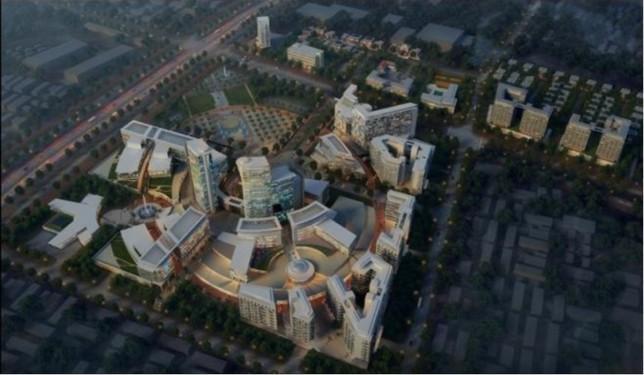
Amata Commercial Complex
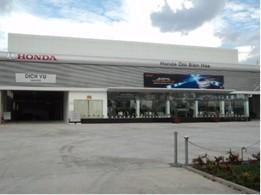
Honda Car Showroom Lotte Mart Hyper Market The details of ACBH’s commercial and residential areas as of 31 December 2025 are as follows.
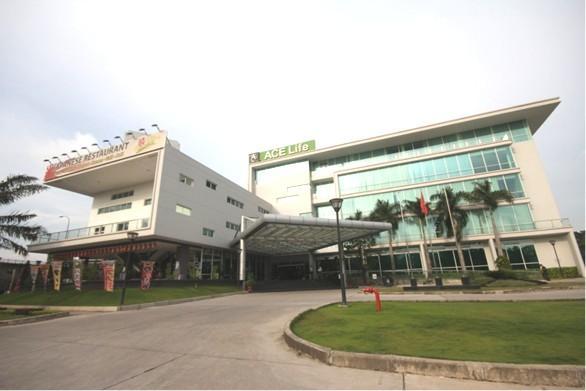
Note: /1 included area of Amata Service Center 6,640 sq.m Office Rental Services ACBH also engages in office rental services, which is located in the Amata Commercial Complex under the name Amata Service Center. Amata Service Center is a 5-story building situated on land area of 6,640 sq.m, with 5,215 sq.m leasable area. Out of this total leasable area, ACBH also uses this space as its own office, and then leases out the rest to other tenants. Moreover, ACBH also has another 321 sq.m meeting room for rent as well, to better facilitate the tenants of office building and also enhance more recurring income.
Amata Service Center
Infrastructure Services ACBH has developed superb infrastructure services to support its clients’ world class standard in manufacturing, where the details of its infrastructure in Amata City Bien Hoa can be concluded as follows.
ACBH charges service management fees to tenants in the industrial estates, ready-built factories, and commercial complexes. ACBH will charge a monthly utilities fee per area leased. For the water, ACBH will charge the amount incurred by the tenant, as well as the wastewater treatment fee. However, for the electricity, tenants will pay directly to Amata Power (Bien Hoa), which is the operator in this case.
Revenue from utility is the type of income that can continually generate stable cash inflow to ACBH. Such revenue is charged to the customer’s monthly and will be increased yearly according to ACBH and the service provider demand. | |||||||||||||||||||||||||||||||||||||||||||||||||||||||||||||||||||||||||||||||||||||||||||||||||||||||||||||||||||||||||||||||||||||||||||||||||||||||||||||||||||||||||||||||||||||||||||||||||||||||||||||||||||||||||

Research & Development
Has R&D Policy (Y/N)
Yes
R&D Cost — Description
-
R&D Cost — Label
Research and development (R&D) expenses over the past 3 years (Million Baht)
R&D Cost — This Year
0.0
R&D Cost — Last Year
0.0
R&D Cost — 2 Years Ago
0.0
Assets Used in the Business
Permanent Assets — Description
Investment
The Company operates as a holding company, therefore one significant asset of the Company is investment in subsidiaries which is shown in the Company’s Separate Financial Statements. As 31 December 2025 the Company had Investment in subsidiaries of THB 2,877 million which are the investments in the Company’s subsidiaries namely ACBH, ACLT, ATLT, and ACHL.
Fixed Assets
As the Company operates as a holding company, the majority of fixed assets are those of the Company’s subsidiaries. As 31 December 2025 the Company had total fixed assets for business operations of THB 7,721 million according to the Company’s Consolidated Financial Statements which represent 57% of the total assets . Details are as follows;
Type of asset | Book value (Thousand THB) As of 31 December 2025 | Ownership | Obligation |
Investment Properties | |||
Ready build factories for lease | 19,038 | Own | None |
Industrial zone | 164,913 | Own | None |
Others | 2,905 | Own | None |
Total | 186,856 | ||
Property and Equipment | |||
Building and installations | 342,718 | Own | None |
Machinery and equipment | 737,499 | Own | None |
Office equipment | 7,632 | Own | None |
Others | 119,368 | Own | None |
Total | 1,207,217 | ||
Right-of-use assets | 12,281 | Own | None |
Prepayment for land use rights | 6,314,597 | Own | None |
Total | |||
Grand Total | 7,720,951 |
Intangible Assets — Description
-
Has Subsidiaries Investment Policy (Y/N)
No
Subsidiaries Investment Policy — Description
-
Marketing Policy & Competition
Reporting Mode
3117
Marketing Policy (Overall)
Customer Profile and Target Group
Amata VN PCL. builds cities of the future that attract a diverse range of companies, from established multinationals to dynamic local players, all united by their need for high-performance infrastructure and a seamless operational environment. Whether it's electronics manufacturing or sustainable cosmetics production, Amata VN provides a platform for success, with a focus on efficiency, reliability, and social responsibility. This commitment aligns with their vision of creating vibrant and inclusive cities where businesses and communities prosper.
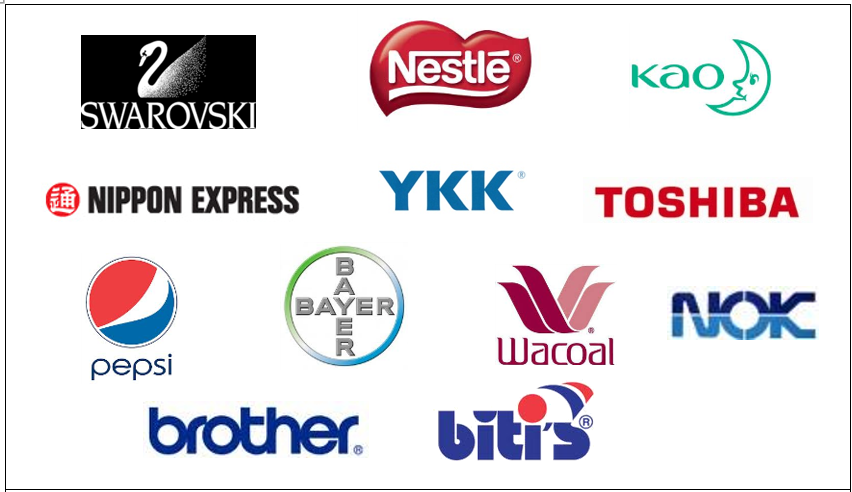
Samples of customers in ACBH industrial estate business
As of 31 December 2025, customers in ACBH’s industrial estate comprised 200 tenants with more than 40% of the industrial factories from Japan the details are as follows:
Country | % |
Japan | 42% |
Taiwan | 12% |
South Korea | 10% |
Vietnam | 10% |
USA | 5% |
Singapore | 4% |
Thailand | 2% |
Others | 12% |
As of 31 December 2025, customers in ACHL’s industrial estate comprised of 20 projects of 16 customers in industrial factories, coming from multinational countries like Taiwan, Japan, China, Korea, Sweden, Singapore. The details are as follows:
Country | % |
Taiwan | 35% |
Japan | 35% |
China | 15% |
Korea | 5% |
Sweden | 5% |
Singapore | 5% |
By end of Dec 2025, Amata City Long Thanh has recruited 12 customers including Vietnam, China, Japan, and Korea. Encouraged by the positive feedback received, we are leveraging this momentum to refine our strategies and accelerate the fulfillment of Phase 1. This strong reception reinforces our commitment to deliver on our promises.
The type of industries of the clients in Amata VN’s industrial estate was relatively diversified. As of 31 December 2025, the type of industry can be categorized as follows:
Industry type | % |
Machinery, steel, metal, plastic, rubber | 40% |
Electric, electronic devices | 12% |
Chemicals, paints | 10% |
Textile, garment | 10% |
Packaging, printing | 6% |
Beverage, food processing | 5% |
Consumer products, health care | 5% |
Logistics, service, infrastructure | 4% |
Wood, furniture | 2% |
Others | 6% |
Sales, Distribution Channel and Marketing Strategy
The Company’s adopted a targeted approach with dedicated sales teams for each key segment: industrial estate businesses and commercial leasing. This specialization ensured in-depth understanding of their respective needs and enabled tailored messaging and solutions. Additionally, strategic partnerships with established agencies, incentivized through a commission-based structure, expanded reach and facilitated access to diverse client networks.
Amata City Bien Hoa was among the first industrial estate developers in Dong Nai province while Amata Long Thanh received the high expectation from authority as new model of high tech preferred industrial park of the province. Furthermore, since 2021, Amata City Ha Long continues shining throughout investors in Northern region with major FDI investors coming. Together with the high quality and standard of the Company’s industrial estate which partly contributed to good reputation of province where the Company’s projects are located, the Company, therefore, has had a good relationship with the province and related governmental entities, e.g. Dong Nai Industrial Zone Authority (DIZA), Quang Ninh Economic Zone Authority (QEZA): investment promotion entities, trade offices and other authorities, and was continually supported by such entities. In the field of industrial estates, Amata strengthens its reputation through connecting with authority media and activities, proactively expose on Online media from traditional economic news to social channels, enhance opportunities to approach customers.
Moreover, the Company has a policy to focus on nurturing a long-term relationship with its customers, both from the development of high-quality industrial estate to respond to the needs of customers and consistently good services both before and after sales. Such services included providing advice and recommendation in various aspects, e.g. assisting and coordinating with the Company’s clients in the application for certificates and other licenses required for their businesses. From the superiority of its industrial estate and comprehensive services, which responded well to the needs of the customers, the Company’s customers were continually satisfied with its services. This was an important factor which attracted new clients through referrals from the existing customers and created confidence in existing customers.
In addition, the Company has joint-marketing activities with Amata Corporation to increase the marketing channel and to maximize the use of resources of Amata Group as a whole. If the clients of Amata Corporation wished to expand their business to Vietnam, Amata Corporation would closely advise and liaise with the Company’s sales teams. The Company expected that this joint marketing would continually increase the number of clients and sales in the future. It would compensate Amata Corporation in the form of commission fee as if Amata Corporation was another agency company. In addition, the Company did joint marketing with its alliances, including Sonadezi and Itochu Corporation, in the form of agents for the Company.
The Company's commitment to excellence in its industrial estate development, combined with its comprehensive and responsive service offering, has elevated the project to premium-grade status. This positioning allows the Company to charge competitive premium service prices in the context of the regional market. As the rate of long-term lease of land for industrial estates has continually risen, the Company implements a systematic policy to analyze land demand and supply within its industrial estate. This analysis informs the annual target for long-term land leases, ensuring optimal utilization and long-term competitiveness and determining its land rental rate for maximum benefit to the Company. Apart from price determination based on demand and supply, the Company also considered the competitive capability of its long-term rates compared with those of nearby industrial estates for price determination. It would assess its remaining land together with the land price of other industrial estates to adjust its long-term land rental rate regularly.
Industry & Competition (Overall)
Industry Outlook
Industrial estate is considered the most important fundamental factor for the establishment of the production base of operators in various industries. Trend of each industry, therefore, inevitably had a direct impact on the industrial estate industry in Vietnam. Apart from domestic economic condition, industry growth also depended upon world economy, especially the countries with free trade and economic system such as Vietnam. Decent economic conditions would increase the consumption rate of the population, allowing the operators in various industries to expand their production base to increase the production capacity and to serve the consumers’ needs, thereby increasing demand in the areas in industrial estate.
Overview of Economy and Investment of Vietnam
Situated on the eastern coast of the Indochina Peninsula, Vietnam boasts a total area of approximately 331,150 square kilometers. Sharing borders with China to the north, Laos to the west, and Cambodia to the southwest, its vast coastline stretches along the South China Sea. Hanoi, the capital city, serves as the nation's political heart and the hub of northern commerce. However, Ho Chi Minh City reigns as Vietnam's economic powerhouse, pulsating with trade, services, import-export activities, and foreign investment.
Vietnam operates under a socialist system with the Communist Party of Vietnam holding a dominant position, though other parties are present. With a population almost 100 million as of 2024, it ranks third in Southeast Asia and sixteenth globally. Vietnamese is the official language, with English gaining prominence as a second language.
Most industrial estates in Vietnam are designated areas developed by the government, private sectors, or joint ventures. These zones provide factories with systematic operation spaces, equipped with essential infrastructure and utilities like roads, electricity, water, telecommunications, wastewater treatment, and other amenities. The aim is to promote efficient city planning, mitigate environmental concerns, and alleviate urban congestion, while fostering regional income distribution and development.
Driven by domestic private sector expansion and consistent growth in both domestic consumption and export markets, the industrial estate business has seen continuous growth and is poised for further expansion in the future, fueled by increasing foreign direct investment attracted by Vietnam's favorable policies and tax incentives.
As of 2025, according to the latest Asia Power Index by the Lowy Institute, Vietnam maintains its position at 12th out of 27 countries with a comprehensive score of 19.9. Notably, Vietnam recorded the second-largest score increase (+1.2 points) across the region. It has demonstrated exceptional strength in Economic Relationships, climbing four spots to rank 7th, driven by its pivotal role in regional supply chains. While still trailing closely behind Indonesia (9th), Malaysia (10th), and Thailand (11th), Vietnam's rapid upward momentum underscores its growing strategic importance and diplomatic influence in the Indo-Pacific.
Moreover, another crucial factor which would support the operating performance of the industrial estate developers in the future is government policy. It comprised of the limitations of the granted industrial estates in the future and the requirement for a number of factories in the country which were situated outside the industrial estates to relocate to the industrial estates for an orderliness of the country and for better quality of life of the population. At present, most factories which were still outside the industrial estates were operated by domestic private sectors while those of the foreign investors were mostly situated within the industrial estates.
According to statistics from the General Statistic Office of Vietnam, it is estimated that Gross Domestic Product (GDP) in 2025 reached a growth of 8.02% from the previous year which is among very few countries that post positive GDP growth in the mist of the global economic volatility. Moreover, foreign direct investment to Vietnam reached USD 38.42 billion in 2025, improved slightly 0.5% compared with 2024 (38.23 billion).
Another factor attracting foreign investment is the country’s diversified climate and geography, allowing Vietnam to be rich in valuable natural resources such as natural gas, oil, and minerals, e.g. coal, steel, copper, and to be suitable for agriculture. Vietnam was ranked the among the world’s top exporters for several products such as black pepper, coffee, and rice.
Vietnam has significantly expanded its global economic footprint through a network of 17 active free trade agreements (FTAs). Key milestones include the Comprehensive and Progressive Agreement for Trans-Pacific Partnership (CPTPP), which was further strengthened in 2024-2025 as the United Kingdom officially became its 12th member, expanding the bloc's reach to Europe. Additionally, the Regional Comprehensive Economic Partnership (RCEP), which entered into force in 2022, has created the world’s largest free trade area, connecting Vietnam with major markets across Asia-Pacific. The European Union-Vietnam Free Trade Agreement (EVFTA), in effect since August 2020, continues to be a primary driver for high-quality investment. Most recently, Vietnam has pivoted towards 'green' and 'digital' trade by signing the Comprehensive Economic Partnership Agreement (CEPA) with the UAE and exploring new frameworks with the United States. These strategic agreements have not only boosted exports but also transformed Vietnam into a top-tier destination for foreign direct investment (FDI) in high-tech manufacturing and sustainable energy.
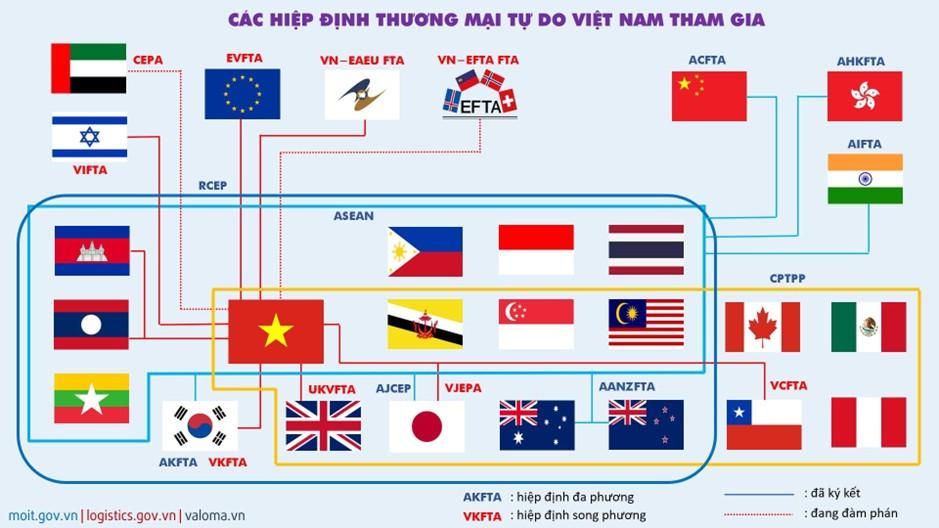
In 2025, Vietnam’s export value totaled approximately USD 475.04 billion market had consistently risen at the average growth rate of 17% compared to 2024, its export value totaled approximately USD 405.53 billion. Most exports were products manufactured by foreign operators invested in Vietnam.
Another reason for Vietnam to become production hub for export and to attract investment from foreign investors is the relatively low labor wage compared with several countries in Asia region. In 2025, Vietnam’s minimum wage stood at USD 133-190 per month. The country was full of working age population (15 – 64 years old), which accounted for around 68% of total population.
The government also focused on continual education and skill development of the population, as illustrated by the population’s literacy rate of more than 94.5% and internet penetration levels of around 79.1% which was higher than those of several countries in the Region.
Additionally, the labor advantage, transportation and logistics system are the factors vital to the foreign investors. One advantage of Vietnam is its 3,444-kilometer border with South China Sea, the world’s major shipping route connecting with the East Asia region, in the east. The S-shape coast was suitable for the construction of maritime logistics system as well as deep-water seaport to support the export to nearby countries, e.g. Thailand, Malaysia, Singapore, Philippines, Indonesia, China, Hong Kong, Taiwan, Japan, South Korea, and world market. Trade and investment in Socialist Republic of Vietnam handbook by Thailand's Department of Export Promotion, Ministry of Commerce, reported that currently Vietnam has 17 commercial ports which could serve the products up to 15 million tons a day. The major ports are as follows:
1. Saigon Port, the largest port in Vietnam, located in Ho Chi Minh City in the south of the country. This port could serve the goods transportation 10 million tons per year.
2. Da Nang Port, the key port in central, is located in Da Nang City. The port could serve the goods transportation 8 million tons per year. Recently, Vietnam’s government encouraged to develop Da Nang Port to become the 5thlargest port in the world.
3. Hai Phong Port, the 2ndlargest port in Vietnam, located in Hai Phong City in the north of the country. This port could serve the goods transportation 7-10 million tons per year.
4. Tan Cang Cai Mep Port, the key port in the south of the country, is located inCai Mep Estuary, Ba Ria - Vung Tau province. This port could serve the goods transportation 1-2 million tons per year.
For air transport, Vietnam has 11 international airports, such as
o Tan Son Nhat International Airport, the largest airport in Vietnam, 7 kilometers away from Ho Chi Minh City, was capable to transport goods approximately 600 thousand tons in 2010, reported by Airports Council International.
o Noi Bai International Airport, 30 kilometers away from Hanoi City, located in the north of the country. Expanded floor area increased from 139,000m2to over 200,000m2; the terminal's operating capacity increased from 10 to 15 million passengers per year.
o Cat Bi International Airport, located in Hai Phong City, can accommodate 4 – 5 million passengers per year.
o Van Don International Airport, located in Van Don District, Quang Ninh Province which is 50 kilometers away from Ha Long City.
Furthermore, Long Thanh International Airport, located in Dong Nai Province—approximately 40 kilometers east of Ho Chi Minh City—is a strategic national project currently nearing completion of its first phase. A historic milestone was achieved in December 2025, when the airport successfully conducted its first technical test flight, confirming the operational readiness of its primary runway and navigation systems. Phase 1 is officially on track to commence commercial operations in 2026. Once all phases are completed, Long Thanh is set to become the largest airport in Southeast Asia, with a total design capacity of 100 million passengers and 5 million tons of cargo per year.
The inland transportation network is vital to connecting water and air transportation systems, significantly strengthening the domestic logistics framework. As of early 2026, Vietnam's road network has expanded extensively, with the national expressway system surpassing the 3,000-kilometer milestone. This includes the strategic North-South Expressway, which now serves as the backbone of the country's trade. The network effectively connects with neighboring giants: the northern expressways provide seamless access to China, a high-potential global market, while upgraded national highways and planned expressway links to the west strengthen economic ties with Laos, fostering continuous regional growth. However, road traffic congestion in the city and insufficient road network which connected among the cities were major obstacles to domestic transportation. The government, therefore, planned to construct several expressways and additional road networks, as well as to standardize all public highways. Apart from the development of domestic inland transportation network, the government of Vietnam also jointly planned with the government of four countries in the Mekong River Sub-Region, i.e. Thailand, Laos, Cambodia and Myanmar, in the development of the East-West Economic Corridor (EWEC) to connect Vietnam, Laos, Thailand and Myanmar, with the destination in Da Nang, Vietnam and Mawlamyine, Myanmar. This would be the route connecting South China Sea with Andaman Sea which was considered a major nautical route of the world. Additionally, the Southern Economic Corridor (SEC) would be developed to connect Vietnam, Cambodia, Thailand, and Myanmar, with the destination in Vung Tau and Quy Nhon, Vietnam, and Dawei (Tavoy), Myanmar. The development of these two economic corridor projects would not only reduce transportation cost and increase the transportation efficiency but also increase the investment in Vietnam to respond to the expansion of trade along the economic corridor, regional trade and export to the world market.
To support foreign investment, a crucial mechanism supporting economy of Vietnam, the government facilitated domestic investment by foreign investors by granting the foreign investors to hold 100% shares in several businesses. Simultaneously, tax privileges were granted to domestic private investors and foreign investors.
Investment Overview of Dong Nai and Quang Ninh Province
Beyond the major hubs of Ho Chi Minh City and Hanoi, Dong Nai and Binh Phuoc have emerged as the premier industrial corridor in the South. While Dong Nai leverages the strategic Long Thanh International Airport to become a global logistics powerhouse, Binh Phuoc is rapidly attracting investors as a new frontier with its vast land fund and expanding expressway network. Together, these provinces offer a high-potential ecosystem for FDI, characterized by modern infrastructure and a continually increasing volume of large-scale projects.
According to the statistics from the Ministry of Planning and Investment of Vietnam, in 2025, Dong Nai was ranked as the 4th 1 highest foreign investment in country with total registered capital of USD 3.3 billion from more than 198 projects (new, change, expansion). This demonstrated its competitiveness, potential and readiness to be the investment base which had considerably developed.
Strategically located at the heart of the Southern Key Economic Region, Dong Nai and its emerging neighbor Binh Phuoc form a dominant industrial powerhouse. Dong Nai, spanning over 5,907 square kilometers with Bien Hoa City as its vibrant hub, has evolved beyond a satellite of Ho Chi Minh City. With the Long Thanh International Airport now entering its operational phase, Dong Nai is the region's premier logistics gateway, situated just 30-40km from HCMC’s center and major maritime terminals.
The region’s appeal is further bolstered by Binh Phuoc, which offers a vast land fund and competitive investment costs. With a combined regional population exceeding 4.3 million (including Dong Nai's 3.3 million), the area provides a diverse labor pool. While basic wages remain more competitive than in Ho Chi Minh City or Hanoi, the seamless connectivity to Ho Chi Minh City —Vietnam’s educational epicenter—ensures a steady supply of high-level management and technical talent. Investors benefit from a lower cost of living, including affordable housing and utilities in developed residential hubs like Bien Hoa and Chon Thanh, making this corridor the ideal destination for sustainable, large-scale industrial projects.
Quang Ninh Province is located in the North of Vietnam around 153 kilometers east of Hanoi. It has a population of approximately 1.4 million with Ha Long as the capital city of the province. Quang Ninh has total area of 6,102 square kilometers and is connected to Hai Phong Province and China. Considered to be part of the economic triangle which includes Hanoi, Hai Phong and Quang Ninh, Quang Ninh is equipped with infrastructures including highways, ports, and airports, such as, Lach Huyen Deep Sea Port, Cat Bi International Airport, Van Don International Airport. Even though the economy of the province is still driven by agricultural activities, the province has a target to enhance industrial and tourism activities. Within the province, there are 2 special economic zones, Mong Cai Border Gate Economic Zone, and Van Don Economic Zone. In addition, another economic zone, Quang Yen Economic Zone, was approved in 2020.
Dong Nai and Quang Ninh Industry Outlook
In the past, the development of industrial estate would be conducted solely by the government of Vietnam through related state enterprise or governmental entity such as Sonadezi so that the industrial factories systematically operated in the same area. The utility system and facility were allocated for the factories and staff in the industrial estates. However, after the government conducted economic and social reform policy for a while, the international trade and services was opened, including a grant for the foreign investors to invest in Vietnam more conveniently. As a result, Vietnam’s economy and purchasing power gradually increased while the foreign investors started to move their production base to Vietnam to export goods to the world market in response to increasing demand. Accordingly, domestic and foreign investors needed to expand their investment in the country, resulting in insufficiency of the industrial estates operated solely by the government to the need of the investors. The government then started to allow both domestic and foreign private investors to operate the industrial estate business in Vietnam. The government jointly invested with the private sectors through the government entities or state enterprises in some projects. In several projects, the government even allowed private sectors to solely own and operate the projects. Therefore, currently there are four approaches for the establishment of industrial estate according to the type of ownership and project operator as follows:
1. Industrial estates owned and operated by the state enterprises or governmental entities.
2. Industrial estates owned and operated by domestic private sectors.
3. Industrial estates are jointly owned and operated by foreign private sectors and the state enterprises or the governmental entities.
4. Industrial estates are jointly owned and operated by foreign and domestic private sectors.
However, the government of Vietnam did not have a policy for the industrial estates owned and operated by the state enterprises or the governmental entities to sell freehold land to target customers. It only allowed for the lease of land in a period of not more than 50 years. For the industrial estates type 2 to 4, the government of Vietnam did not grant land ownership to the industrial estate developers. It only granted the long-term lease of such land for industrial estate development. The period of land lease to each operator varied with the maximum period of 50 years. Therefore, an authorization to use land within the industrial estates for the target group of customers of every industrial estate operator, both governmental and private sectors would be in form of long-term land lease with the maximum rental period of 50 years.
The demand for the industrial estates by the manufacturers had been growing constantly. The existing salable or rental areas of the industrial estates in Hanoi and Ho Chi Minh City started to be insufficient to support the expected demand in the future. As such, land selling price and long-term rental rate within the industrial estates in Hanoi and Ho Chi Minh increased. Additionally, the establishment of new industrial estates or the expansion of the existing industrial estates were limited as several areas were developed into residential areas or other facilities, e.g. department store stores, school, hospital, and governmental office, etc., to be fully developed into urban society. As a result of such imbalance in demand and supply, the government and private industrial estate developers expanded investment in the neighboring areas of Hanoi and Ho Chi Minh City, as well as the expansion of investment towards other potential regions, both in form of the establishment of new industrial estates and the expansion of the existing industrial estates.
Comparing with other provinces, Dong Nai and Quang Ninh provinces are considered outstanding and targeted by the manufacturers based on its location, readiness on labor and efficient transportation system. Dong Nai and Quang Ninh, therefore, became the province with high potential for industrial estate development of the government and private developers.
Competition of the industrial estate operators in such provinces was relatively not intense since the success of the industrial estate operation required, apart from skills and extensive experience as well as intensive investment, a good relationship with the government and other governmental entities. Such a factor was considered a major obstacle for new operators to compete in the industry (Barrier of Entry).
Competition of the Industrial Estates in Dong Nai and Quang Ninh
Industrial estates in Dong Nai
Name of industrial estates | Total long-term rental area (hectares) | Remaining long-term rental area (hectares) |
Sonadezi Giang Dien | 529 | 41 |
Long Duc | 281 | - |
Loc An Binh Son | 498 | 19 |
Nhon Trach 6 | 314 | - |
Source: Company survey
Industrial estates in Quang Ninh, Hai Phong and Others
Name of industrial estates | Total long-term rental area (hectares) | Remaining leasable rental area (hectares) |
Quang Ninh | ||
Viet Hung | 301 | - |
Dong Mai | 168 | - |
Deep C 1 (Nam Tien Phong) | 487 | 285 |
Deep C 2 (Bac Tien Phong) | 1,193 | 550 |
Texhong Hai Ha | 660 | 66 |
Hai Phong | ||
Deep C I | 541 | - |
Deep C II | 645 | 200 |
Deep C III | 520 | 180 |
Others | ||
An Phat Hai Duong | 376 (phase 5: 150 ha, 100 ha industrial) | 90 |
Green IP Thai Binh | 589 (phase 2 expansion : 200 ha) | 290 |
Source: Company survey
Currently in Dong Nai, available industrial land in industrial estates that the Company consider competitors are not much leading to the Company being able to increase selling price and able to lease out land continuously. However, the main obstacle to developing land has been related to the approval of license and land expropriation which has led to the Company’s inability to develop land to meet customers’ demands. As for the North, each location has its competitive advantages, but overall, the expansion of industrial estates has shown a strong demand following the overall growth of Vietnam. Moreover, the North part of Vietnam considered to be one of the attractive locations for the relocation of manufacturers out of China.
The Company had strong point over other competitors as an experienced operator in industrial estate development in Vietnam, was also equipped with a number of several professional resources with expertise in industrial estate development and management. Some management and staffs worked with Amata Corporation, the Company’s parent company, and a leading industrial estate operator in Thailand. As such, the Company could well respond to the needs of the customers with excellent quality of services. Moreover, the Company has a good relationship with related governmental entities.
Apart from the aforementioned strengths, the Company also enhanced its competitiveness with several business strategies as follows:
1. The Company had a policy to differentiate its industrial estates from other operators through the development of superior quality of infrastructure and utility system coupled with the development of land for long-term lease so that the customers could be ensured of continual business operation should the infrastructure and utility system supplied by the government crash. Samples of the infrastructure serviced provided to the customers within the industrial estates are water, wastewater treatment system, electricity, etc, with the international standards. The Company ensures to retain customers’ continual business operation. Such a policy differed from other operators which focused mainly on the development of land for long-term lease or sale.
2. The Company has allocated part of the land for commercial and residential projects within the industrial estate, e.g. shop, showroom, restaurant, hospital, school, sports and recreational center, apartment, executive villa, hotel, and office building, etc. With the objective to upgrade its industrial estates to be an ideal city under “Smart City” concept fully equipped with facility for the executives and staff of the operators in the industrial estates. Such a policy clearly differentiated the Company’s industrial estates with those of other operators, enabling it to attract upper-class customers. Therefore, such a project was a crucial factor which truly supported the main business of the Company.
3. The Company allocated part of land for the construction of a ready-made factory in its industrial estates for rent by the operators in need of readiness and convenience for the commencement of business, as well as the operators who did not want to make an initial large investment for long-term land rental and plant construction to mitigate business risk, and small or medium operators with limited capital. Such a policy not only helped diversify the group of customers and sources of income, thereby strengthening its operating performance, but also differentiated it with other operators. The Company had a competitive edge over its rivals in attracting a certain group of customers.
4. The Company focused on providing the best services under international standards to all customers both before and after the signing of a long-term lease. It provided various advice such as assistance in obtaining investment certificates and other licenses required for the business of the customers, etc. Such complete services could well respond to the needs of the customers, leading to continual customers’ satisfaction and its maintenance of a long-term relationship with the customers. Such policy was a crucial factor for the positive public relations of the Company’s industrial estates amongst existing and new target customers, enabling the Company to consistently expand its customer base.
5. Sourcing strategic partners to create synergies from different customer bases, expertise in different areas of business, to provide diverse services and for financial support for the growth of the Company.
Procurement of Products & Services
Reporting Mode
3117
Procurement (Overall)
Land Sourcing
In establishing an industrial estate, the Ministry of Planning and Investment and related governmental units are responsible to submit a master plan for the Prime Minister to approve. The approved master plan will then be applied in order toto develop the area for industrial estate and the surrounding infra structure. Further to the Prime Minister’s approval, the Provincial People’s Committee will make the decision in implementing the approved plan in detail. According to the law of Vietnam, the government is to allocate the area for an entity or individual to utilize for investment develop construct and manage the infrastructure of an industrial estate with the Provincial People’s Committee as the main government unit to allocate and regulate the industrial estate together with other relevant authorities in each province.
According to Vietnamese laws, non-Vietnamese are not allowed to own land; hence most of the industrial estate developers will enter into a 50-year land lease agreement with the government and pay rental on an annual or one-time lump-sum basis when the agreement is signed. Currently, the Company chooses to pay the rental on an annual basis to the government at the start of the contract, unless one-time lump-sum is preferred by the customer. For both cases, the Company will pass-through land lease rental to the customers, especially those who operate factories and have demand for a long-term lease agreement.
The details of the Investment Registration Certificate (IRC) granted to the company as of 31 December 2025 are as follows:
Unit: Hectares | Industrial | Commercial | Total |
ACBH | 513 | 19 | 532 |
ACLT | 404 | 6 | 410 |
ATLT | - | 722 | 722 |
ACHL | 687 | - | 687 |
ASCLT 1 | - | 55 | 55 |
ASCLT 2 | - | 52 | 52 |
ACPT | 476 | - | 476 |
Quang Tri | 481 | - | 481 |
Total | 2,561 | 854 | 3,415 |
ACBH has been granted the total land area of around 513 hectares (or 3,206 rais) for project development. However, if ACBH would like to expand its project, it will need to obtain the approval for each project phase from Dong Nai Industrial Zone Authority (DIZA) as per requirement from Investment Certificate (IC). At present, ACBH’s projects that have been already granted Investment Certificates are project phase 1, 2A, 2B, 2D, 2E, 3A, and the Amata Commercial Complex with the total area of around 532 hectares (or 3,325 rais) with details below.
ACBH | Area Granted Investment Certificate (Hectares) | Investment Certificate Expires |
Phase 1 | 347 | 31 December 2044 |
Phase 2A | ||
Phase 2B | ||
Phase 2D | 46 | 5 February 2058 |
Phase 2E | 55 | |
Phase 3A | 65 | 9 September 2061 |
Total Industrial area | 513 | |
Amata Commercial Complex | 19 | 21 August 2057 |
Total land | 532 | |
Land not yet obtained IC Approval | 27 |
ACLT has been granted the total land area of around 410 hectares (or 2,563 rais) for project development. Currently, ACLT’s projects that have already been granted Investment Certificates are as detailed below.
ACLT | Area Granted Investment Certificate (Hectares) | Investment Certificate Expires |
Phase 1 | 120 | 24 June 2065 |
Phase 2 | 68 | 24 June 2065 |
Phase 3 | 97 | 24 June 2065 |
Phase 4 | 125 | 24 June 2065 |
Total Industrial area | 410 |
ACHL has been granted the total land area of around 687 hectares (or 4,294 rais) for project development. However, if ACHL would like to expand its project, it will need the occupancy is over 65% and to obtain approval for each project expansion from Quang Ninh Economic Zone Authority (QEZA) as per requirement from Investment Certificate (IC). At present, ACHL’s projects that have been already granted Investment Certificates are project phase 1, 2, 3, 4, 5 with the total area of around 687 hectares (or 4,2943 rais) with details below.
ACHL | Area Granted Investment Certificate (Hectares) | Investment Certificate Expires |
Phase 1 | 116 | March 2068 |
Phase 2 | 120 | March 2068 |
Phase 3 | 289 | March 2068 |
Phase 4 | 85 | March 2068 |
Phase 5 | 76 | March 2068 |
Total Industrial area | 686 |
Furthermore, the company was granted an Investment Registration Certificate for Amata City Phu Tho Joint Stock Company (“ACPT”) with total area of 476 hectares in December 2025. The Enterprise Registration Certificate was received, and the Company is in process to complete the relevant procedures for the establishment.
Raw Material Acquisition (Overall)
-
Production Policy (Overall)
-
Distributors (Overall)
-
Number of Raw-Material Distributors (Overall)
0
Production Capacity (Overall)
| Item | Unit | Unit (if Other) | Used | Capacity |
|---|---|---|---|---|
| - | Others | - | 0 | 0 |
Domestic/Overseas Purchase Proportion (Overall)
| Raw Material | Source Country | Value |
|---|---|---|
| - | Vietnam | 0 |
Projects Under Construction
Has Projects Under Construction (Y/N)
Yes
Description
Revenue to be recognised for the remaining performance obligations
As at 31 December 2025, revenue totaling Baht 2,333 million (2024: Baht 1,913 million) is expected to be recognised in the future in respect of performance obligations under contracts with customers that are unsatisfied (or partially unsatisfied). The Group expect to satisfy these performance obligations within 2 years.
Total Projects
9
Total Project Value
2333.0
Recognized Value
0.0
Remaining / Unrecognized Value
2333.0
Projects
| Project Name | Value | Income % | Est. Years | Est. Months |
|---|---|---|---|---|
| Land development for ACBH, ACLT and ACHL industrial estate. | 2,333 | 100 | 2 | 0 |
Debentures & Bills of Exchange
Has Debentures (Y/N)
No
Convertible Securities
Has Convertible Securities (Y/N)
No